The Bottom Is Never Where You Want It, Only Where Fear Breaks First
Dec 2, 2025
Why the Hunt for a Perfect Low Is a Fool’s Mirage and How Mass Psychology Builds the Real Buy Signal
Introduction: The Market Timing Fantasy
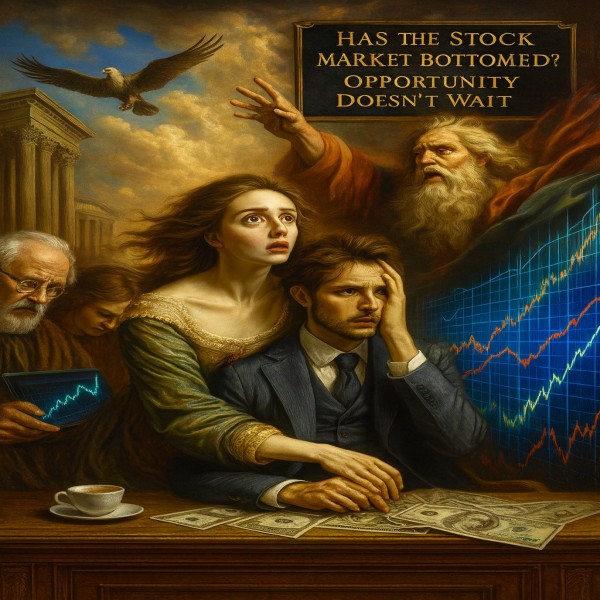
Trying to nail the exact bottom has seduced investors for centuries. It whispers a promise of mastery, a chance to prove that intelligence beats chaos. Yet every cycle shows the same brutal truth: bottoms are not clean numbers. They are psychological breaking points. They form in the wreckage of fear, not at the precise tick that traders fantasise about. The question “Has the market bottomed?” is the wrong target. The real inquiry is simpler and far more revealing. Has fear fully bloomed. Has the herd reached that moment when it cannot take another minute of pain? Markets bottom when people break, not when charts look tidy.
The obsession with calling the low distracts from the engine behind every recovery: capitulation. Panic drives valuations to extremes. Greed drives them to collapse. Somewhere between those emotional cliffs lies the turning point. You see it when the crowd’s pulse slows into numbness. You see it when investors stop arguing and start withdrawing. You see it when they would rather miss the rally than endure another round of losses. That apathy, not price alone, signals that opportunity is taking shape.
The Setup: How Big Players Script a Trap for Both Sides
Large operators love confusion. They thrive in fog. One of their oldest tricks is to engineer a rally powerful enough to frighten bears but fragile enough to lure bulls. They push major indices over declining trendlines and allow hope to bloom. A brief rush to the upside forces shorts to abandon their positions. Meanwhile, bulls, thinking the storm has passed, step in with confidence. When both camps are positioned in the open, the real move hits. The rug is pulled. Prices collapse. Carnage spreads across both sides.
Such traps are not abstract theories. They are deliberate psychological structures. A push toward the Dow’s mid-34,000 range would produce precisely the conditions required: short covering, renewed optimism, and the perfect window to reverse the flow. In that reversal lies the lesson. Market bottoms do not appear when sentiment looks healthy. They appear in the aftermath of engineered chaos. They form when players with deep pockets finish harvesting fear from the weak.

The 2008–2009 Echo: How Playbooks Are Recycled
Today’s sentiment landscape still carries a haunting similarity to the environment that shaped the 2008–2009 recovery. Back then, the market staged a savage rally while bullish sentiment remained deeply depressed. The contradiction was not an accident. It was a strategy. Scare the public so thoroughly that they refuse to participate in the rebound. Accumulate while they hide. Profit while they lick their wounds. That model resurfaced because it works. It convinces the herd that every surge is fake, every bounce is a trap, every ray of hope is an illusion. Meanwhile, the strongest hands buy quietly, slowly, methodically.
This approach cannot be used every cycle. People eventually learn. But the twelve-to fourteen-year rhythm suggests a generational window of forgetfulness. Once the memories fade, the exact blueprint can be run again. And now the question returns: has the market bottomed? Not in price terms but in psychological exhaustion. If investors are still hesitant, still scarred, still absent from the table, the playbook is active.
The Sentiment Fog: Misleading Measures and Hidden Positions
One of the latest confusions is the attempt to reinvent fear metrics. Traditional surveys split investors into three groups: bullish, neutral, and bearish. Many analysts fixate on the spread between bulls and bears. Yet the neutral group carries the real signal. They represent individuals too uncertain to choose a side. They are defanged bears and declawed bulls. They are people who have lost conviction but not yet accepted their own anxiety.
By ignoring the neutral cluster, sentiment readings distort the truth. Combine the neutral and bearish camps and compare that weight against the bullish minority. That ratio exposes the real climate. It reveals when the crowd is battered, hesitant, and drained. It shows when smart money can begin planting long-term positions. Confusion is not the enemy. It is a doorway. When people do not know what to think, they do not act. When they do not act, the strongest hands accumulate in silence.
Timing Fear Instead of Chasing Perfection
The ritual of bottom-calling is rooted in ego. Investors want the satisfaction of saying they caught the turn. They want proof of skill, as if precision is the mark of mastery. In reality, mastery lies in recognising when fear peaks. The bottom is not a specific candle. It is a state of mass psychology. When people are terrified, opportunities multiply. When they are confident, risks balloon.
History confirms this. Some of the most significant gains were made by investors who stepped in while the crowd screamed about collapse. When blood-filled headlines and panic-filled portfolios, they focused on valuations, sentiment cycles, and risk premiums. They bought not because the market bottomed but because people bottomed. Fear turns rational assets into bargains. Waiting for confirmation delays the reward until most of the upside is gone.
The Contrarian Mindset: Courage in the Right Direction
Contrarian investing is not rebellion for rebellion’s sake. It is the disciplined study of how people behave at extremes. Technical tools like RSI or MACD help refine entry points, but the map begins with sentiment. When the crowd dumps shares at a discount, contrarians collect. When the crowd celebrates, contrarians step aside. That tension between emotion and discipline is the source of advantage.
Consider early 2009. While financial news blasted catastrophe, while portfolios burned, while investors swore off markets entirely, contrarians stepped into companies whose fundamentals remained intact. They bought giants like Apple and Amazon at levels that appear absurd today. Their edge was not prediction. It was courage. They understood that mass psychology inflates danger and depresses opportunity. They used technical clarity to sharpen timing but used human behaviour to define direction.
The Mirage of the Perfect Bottom
Waiting for perfect certainty is waiting for a ghost. Markets turn long before the crowd accepts reality. By the time headlines announce a bottom, the bulk of the upside is already gone. Investors who wait for clarity step in when prices are no longer cheap. They trade comfort for diminished reward.
The real question should never be “Has the market bottomed?” The deeper question is “Has peak fear done its work?” If people are still cautious, if sentiment remains fractured, if optimism is fragile, then the foundation for a new advance is forming, not in price, but in emotion.
Where the Real Opportunity Lives
Understand the crowd’s rhythm. At peaks, people become intoxicated with gains. They ignore risk. At troughs, they become numb. They ignore opportunity. Success belongs to those who stand outside that cycle, who observe the waves without drowning in them. The market is not a puzzle of candles. It is a theatre of human impulses. Master the impulses, and the candles begin to speak.
Fear is not an exit point. It is a signal. When people hesitate, the future becomes discounted. When people despair, the future becomes cheap. The wise investor studies these moments with patience and clarity.
Final Thought
Opportunity never waits. It appears when the crowd recoils. It grows when people second-guess every decision. It matures while fear thins liquidity and distorts value. Those who demand perfect timing will miss the next surge. Those who understand mass psychology will position themselves long before the herd regains courage.
The bottom forms when investors emotionally shatter, not when technical lines are crossed. Pay attention to fear. Pay attention to hesitation. Pay attention to silence. That is where the market whispers, not screams, that the next chapter is beginning.