

The Trapdoor Beneath the Bull: Why Panic Is Your Greatest Threat
Updated Feb 13, 2026
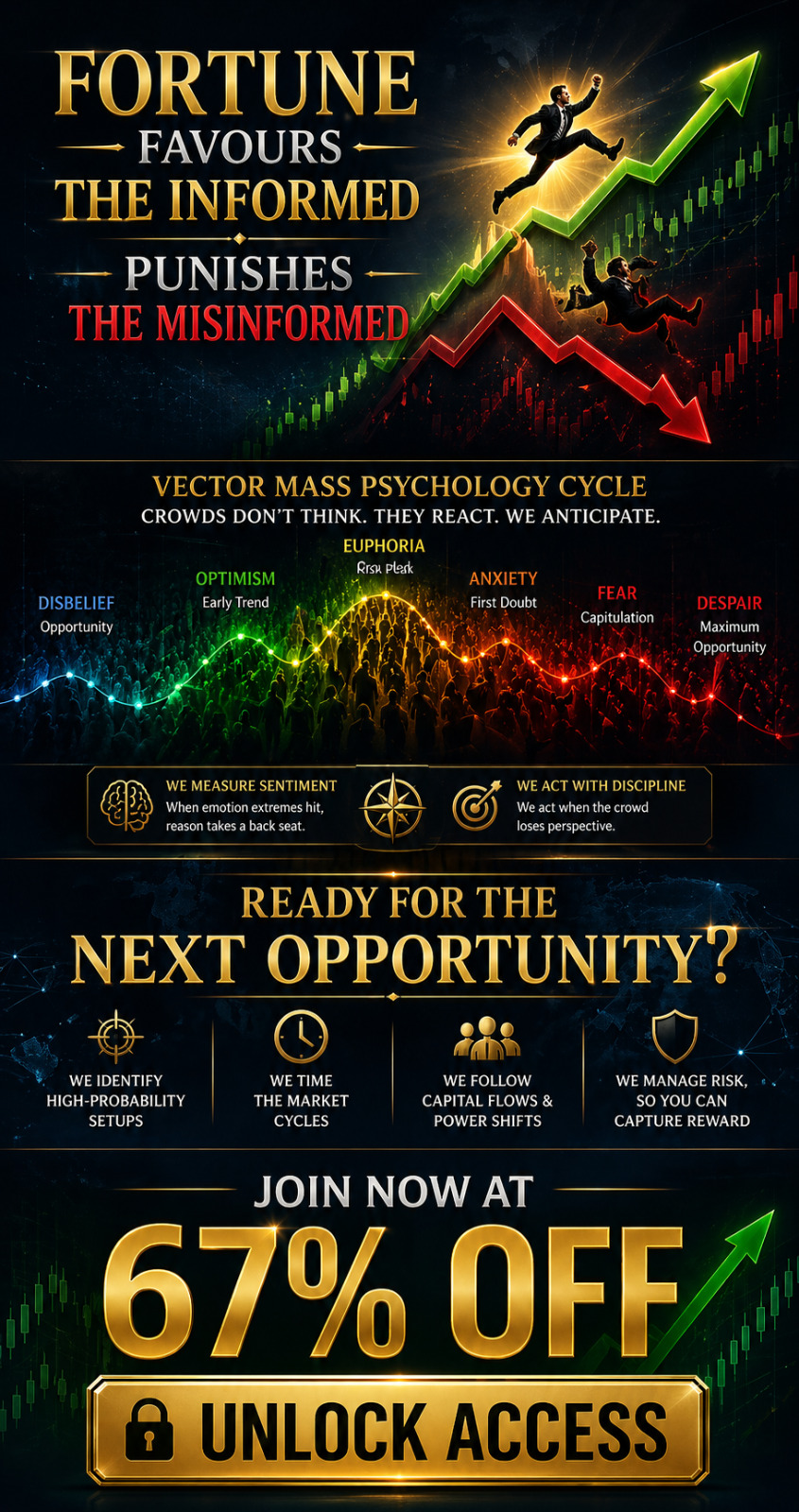
Consider this your wake‑up call. Another stock market crash coming isn’t just a headline—it’s the shadow every bull run casts. The danger isn’t the numbers or the breaking news. It’s the viral spread of psychological contagion—panic moving faster than any algorithm ever could. When fear becomes the dominant currency, even the strongest portfolios get swept into the stampede.
Crashes never materialise out of thin air. They form in the collective mind: irrationality, herd instinct, and the primal urge to run as soon as others bolt. It’s not the crash that destroys wealth—it’s the panic selling, the surrender of logic, the mass decision to abandon discipline. To investors who fail to prepare, the trapdoor opens without mercy. Those who understand how panic behaves can stand where others fall—and turn chaos into opportunity.
Understanding Fear-Driven Market Behaviour: Psychology in the Eye of the Crash
Every major crash proves the power of fear. The 1929 freefall, the 1987 plunge, the dot-com collapse, and March 2020’s lightning crash—they all followed the same behavioural script. Loss aversion makes the pain of losing overwhelm the pleasure of winning. Confirmation bias pushes investors toward news that feeds their dread. Social proof pressures people to mimic the majority, turning corrections into avalanches.
Technology amplifies everything. News moves instantly. Panic moves faster. Social media turns tremors into earthquakes and rumours into doctrine. Algorithms accelerate the fall by chasing momentum. In moments, the crowd shifts from rational to feral. The 2020 crash was less about infection rates and more about emotional contagion—fear amplified through digital echo chambers.
Preparing your portfolio with another stock market crash coming means accepting that fear is unavoidable—and herd behaviour is inevitable. The real test isn’t whether panic arrives. It’s how you respond when it does.
Contrarian Courage: Transforming Panic Into Opportunity
The greatest fortunes rise from moments the crowd misjudges. When most investors freeze, contrarians see mispricing. Not recklessness—discipline sharpened by clarity.
Picture Warren Buffett buying American stocks in 2008 while others sold them for scraps. Think of Jesse Livermore during the Great Depression, treating panic as signal, not doom. These investors recognised that forced selling drags even the highest‑quality assets into the fire—creating long‑term bargains for those with cash and courage.
Contrarian investing isn’t blind defiance. It’s the ability to read sentiment, recognise extremes, and act when evidence contradicts hysteria. Preparing for another crash means cultivating a mindset that questions consensus, scans for value in distress, and moves with conviction while the herd sprints in the opposite direction.
Fear as Fuel: Harnessing Volatility With Advanced Strategies
During crashes, the options market becomes a laboratory of fear. Volatility surges, put premiums explode, and traders pay absurd prices for protection. For the prepared, this fear is income.
Imagine the S&P 500 dropping 30% in weeks. Blue‑chip stocks trade at valuations unseen in years. Put options on these companies fetch sky‑high premiums. By selling those puts, you earn rich income for taking calculated risk—either pocketing the premium or acquiring quality shares at a deeper discount.
Next, recycle those premiums into LEAPS—long‑dated call options on companies you expect to rebound over the coming years. This creates asymmetric payoff profiles: limited downside, outsized upside. You turn panic into raw material and rebuild your portfolio on the other side of fear.
This isn’t recklessness. It’s controlled exposure—structured, deliberate, and entirely grounded in logic.
Discipline and Risk Management: The Contrarian’s Safety Net
Contrarian courage without discipline is a recipe for disaster. The graveyard of investing holds those who confused confidence with strategy. “It can’t go any lower” is the most dangerous phrase in a crash—and it’s always wrong.
True preparation means defining risk ahead of time: deciding which assets deserve conviction and at what prices you will double down. Diversify across sectors and regions. Use stop losses sparingly and intentionally—they’re tools, not crutches. Above all, maintain emotional neutrality. Crashes are emotional storms. Without discipline, you become part of the debris.
The best portfolios don’t rely on forecasts. They rely on process—repeatable, rational, and immune to the emotional chaos swallowing the crowd.
Building a Future Beyond the Herd: Empowerment Through Clarity
Breaking from the crowd is liberating. Preparing your portfolio for another crash is not submission to fate; it’s control over it. Panic blinds the majority. Preparation sharpens the minority.
Once you learn to harness fear instead of absorbing it, you separate yourself from the emotional volatility of the herd. Your decisions become deliberate, grounded, and immune to headlines. Your capital moves with purpose, not impulse.
To prepare is to accept uncertainty—and build strength through it. Hold cash for opportunity. Track the assets you want. Know your entry points before panic arrives. Preparation is clarity. Clarity is power.
From Fear to Foresight—Mastering the Next Crash
Another stock market crash is not doom. It’s invitation. The line between ruin and resilience is drawn not by privileged information but by mindset: the ability to confront fear, defy consensus, and act with precision while others thrash in uncertainty.
The market rewards those who can see beyond the panic—a truth that repeats through every crash in history. When headlines scream and the herd bolts, your advantage lies not in running—but in understanding the structure of the storm itself.
Prepare now. Build clarity. Train discipline. When the next crash strikes, transform what others fear into the foundation of your next advance.