The Nuclear Delusion: Why the Crowd Always Sees Armageddon
June 12, 2026
Every generation seems convinced it is standing at the edge of the abyss. The names change, the nations change, the villains change, and the headlines change, but the emotional pattern remains remarkably consistent. One decade the threat is nuclear war. Another decade it is overpopulation, resource depletion, financial collapse, demographic collapse, artificial intelligence, climate catastrophe, or some other variation of the same theme. The crowd is endlessly attracted to endings because endings are easier to understand than adaptation.
This tendency becomes especially visible during periods of uncertainty. Human beings have an uncomfortable relationship with uncertainty because it forces them to operate without clear answers. Faced with a complex future, many people would rather embrace a terrible certainty than an uncertain outcome. That preference explains why predictions of disaster spread so easily. A forecast suggesting that society will continue adjusting, adapting, and muddling through attracts little attention. A forecast predicting catastrophe spreads like wildfire.
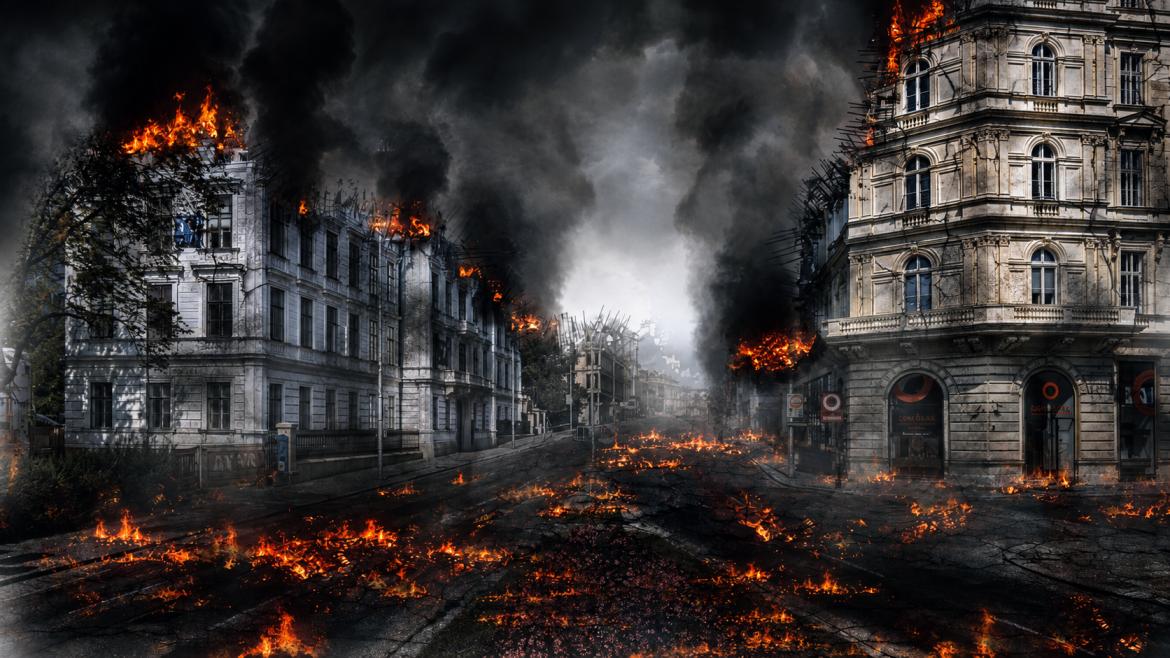
Nuclear war occupies a special place within this psychological landscape because it combines fear, uncertainty, and spectacle into a single package. It is perhaps the ultimate disaster narrative. The consequences are so enormous that they overwhelm rational analysis and allow imagination to take control. Most people do not assess nuclear risk through military doctrine, strategic incentives, command structures, economic realities, or historical behavior. They assess it emotionally. They imagine the outcome, experience the fear, and then mistake the emotion for probability.
This is where perception begins to replace reality.
Mass psychology teaches that crowds rarely respond to events directly. They respond to their perception of events. When enough people share the same perception, that perception begins to feel like reality regardless of whether the underlying facts support it. Fear becomes self-reinforcing. Every headline appears to confirm the existing narrative. Every statement becomes evidence. Every rumor gains weight. The emotional vector grows stronger while objective analysis becomes increasingly difficult.
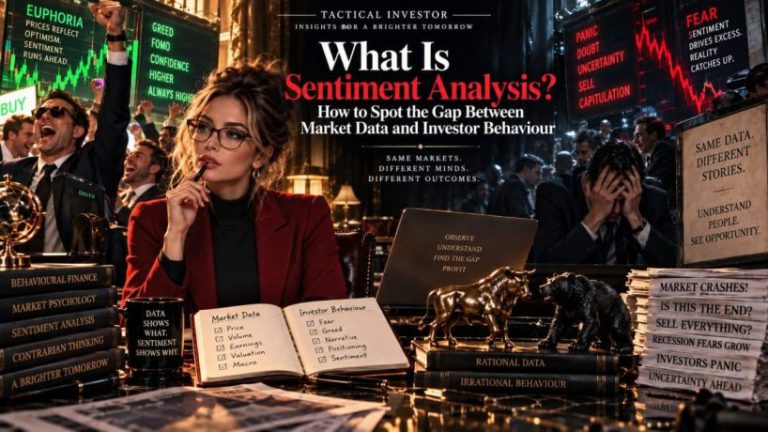
The same phenomenon appears in markets. During a crash, investors become convinced that every decline marks the beginning of a permanent collapse. During a speculative mania, they become convinced that prosperity has become permanent. In both cases, perception overwhelms reality. The crowd sees not what is happening but what it expects to happen.
Nuclear-war narratives often follow the same script.
A geopolitical confrontation emerges. Politicians exchange threats. Experts appear on television. Commentators begin discussing worst-case scenarios. Social media amplifies every statement and every rumor. Before long, a substantial portion of the public becomes convinced that the unthinkable is not merely possible but imminent.

Yet history tells a different story.
Throughout the Cold War, the world experienced numerous moments that appeared extraordinarily dangerous. There were missile crises, proxy wars, military confrontations, intelligence failures, and periods of intense hostility between nuclear powers. Yet despite the rhetoric, despite the fear, and despite countless predictions of impending catastrophe, the underlying incentives remained remarkably consistent.
People often forget that power structures have survival instincts too.
The individuals who control political institutions, financial systems, military establishments, and vast pools of capital are many things, but they are rarely enthusiastic participants in their own destruction. The same elites accused of manipulating events for influence, wealth, or power are unlikely to view global annihilation as an attractive outcome. Whatever disagreements may exist among nations, there remains a significant difference between competition and collective suicide.
That distinction is often lost when emotion dominates perception.
The crowd tends to imagine history as a sequence of dramatic endings. Reality is usually far less theatrical. Great powers rise and fall. Financial systems evolve. Reserve currencies gain influence and eventually lose it. Political structures become stronger, weaker, and stronger again. Civilizations transform themselves repeatedly. Yet the process typically unfolds through erosion, transfer, adaptation, and gradual change rather than sudden extinction.
Even when dramatic events occur, the underlying pattern remains remarkably resilient.
The Roman Empire disappeared, yet Roman law, language, institutions, and cultural influence survived. Great Britain lost its position as the world’s dominant power, yet Britain remains a significant economic and financial force. China rose, declined, fragmented, and rose again. History is filled with examples of transformation. It contains surprisingly few examples of complete disappearance.
This is why certainty is often more dangerous than uncertainty.
The person convinced that nuclear war is inevitable is operating from the same psychological framework as the investor convinced a stock can only rise. Both have mistaken a possibility for a certainty. Both have allowed emotion to narrow perception. Both have become vulnerable to the oldest trap in human behavior: believing that the future is obvious.
Vector Mass Psychology suggests a different approach. Instead of focusing on the narrative, focus on the emotional forces driving the narrative. Instead of asking whether the latest crisis is unique, ask whether the crowd’s reaction is unique. More often than not, the answer is no.
Fear has changed remarkably little throughout history.
The technology changes.
The headlines change.
The players change.
The emotional engine remains largely the same.
That does not mean nuclear conflict is impossible. It means that the crowd’s confidence in predicting it should be viewed with caution. History suggests that people consistently overestimate the probability of dramatic endings and underestimate the power of adaptation.
The apocalypse industry understands this better than anyone. It has one extraordinary advantage over every other business model. When the prediction fails, the prediction itself is rarely questioned. The date changes. The villain changes. The storyline changes. The product remains exactly the same.
Fear sells because uncertainty is uncomfortable.
Yet investors, historians, and students of mass psychology eventually discover a different lesson. The crowd’s greatest mistakes rarely emerge from a lack of information. They emerge from a failure to separate perception from reality.
And nowhere is that distinction more important than when the world becomes convinced the end is near.

Other Engaging Articles