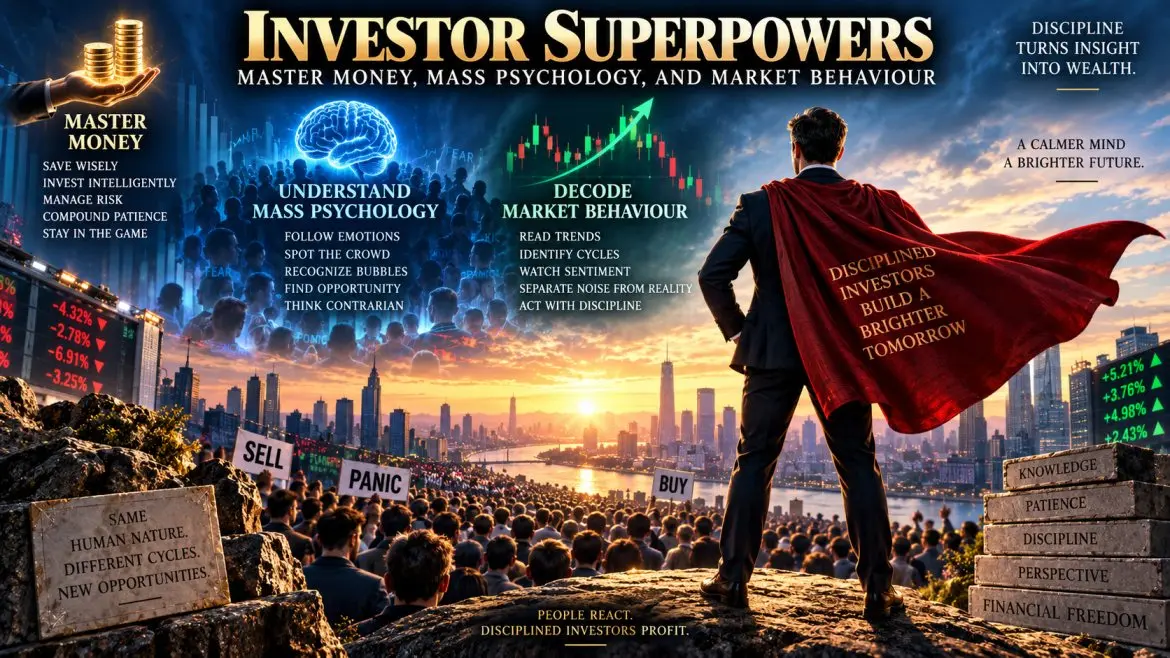
The Investor’s Superpowers: Mastering Money, Mass Psychology, and Market Behaviour
Sept 10, 2026
Most investors search for a secret indicator, a perfect stock, or an algorithm capable of predicting the future. They are looking in the wrong place because the greatest advantages in investing are not found in a screen, a formula, or a headline, but in the ability to understand human behaviour and act when the crowd is doing the opposite.
The real superpowers of investing are patience, discipline, perception, liquidity, and psychological independence. These abilities allow an investor to recognize when fear has become excessive, when optimism has detached from reality, and when the market’s prevailing vector is beginning to change. The technology may evolve, the financial instruments may change, and new narratives will constantly appear, but the human beings creating those market cycles remain remarkably consistent.
The First Superpower: Seeing What the Crowd Cannot See
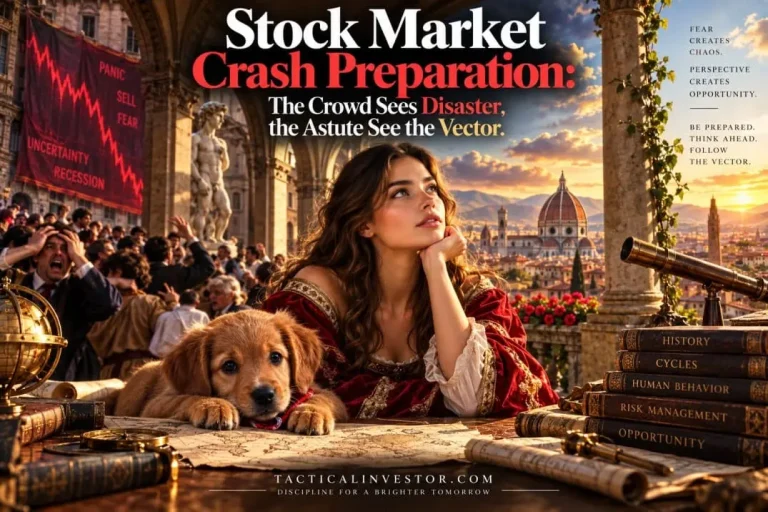
The most valuable investment skill is not predicting the future. It is seeing the present more clearly than the crowd. Markets are constantly flooded with information, yet information alone creates little advantage because everyone has access to it. The advantage comes from understanding how investors interpret that information, how narratives spread through the crowd, and how emotional reactions transform ordinary developments into periods of euphoria or panic.
This is where vector psychology becomes important. Every market has a dominant directional force, but that force is created by the interaction of liquidity, sentiment, positioning, fundamentals, expectations, and human behaviour. The investor’s task is to identify that vector, determine whether it is strengthening or weakening, and recognize when the crowd’s emotional interpretation begins to diverge from what the market itself is actually doing. That is far more powerful than simply asking whether the market is bullish or bearish.
Mass Psychology: The Invisible Force Moving Capital
The market is not a machine. It is a massive psychological organism composed of millions of participants responding to fear, greed, uncertainty, incentives, and the behaviour of everyone around them. When prices rise, optimism attracts more optimism. Investors begin to believe that rising prices validate the original thesis, which encourages additional buying and creates a self-reinforcing feedback loop. When prices fall sharply, the same mechanism operates in reverse, with fear creating selling, selling creating more fear, and fear eventually forcing investors to liquidate assets they previously considered valuable.
This is why mass psychology is one of the most important investment disciplines. Understanding the crowd allows you to recognize that the market’s emotional state can become detached from fundamental reality, creating both excessive valuations during euphoric periods and extraordinary discounts during periods of panic. The crowd is not stupid. The crowd is emotional, and emotional behaviour becomes increasingly predictable when it reaches an extreme.
The Superpower of Patience
Patience sounds ordinary because it is simple, but in financial markets it is extraordinarily rare. Most investors want immediate validation. They buy a stock and expect it to rise, enter an option position and expect an immediate payoff, or identify a long-term thesis and become frustrated when the market refuses to recognize it on their preferred timetable. That impatience creates unnecessary trading, emotional decisions, and the tendency to chase whatever asset is currently attracting the greatest attention.
Patience changes the entire equation. It allows an investor to wait for valuation, sentiment, and market behaviour to align instead of forcing capital into mediocre opportunities simply because cash feels unproductive. The patient investor also understands that opportunity is cyclical. There will be periods when almost everything appears expensive and periods when fear creates opportunities everywhere. The objective is not to remain permanently active, but to remain prepared.
The Superpower of Psychological Independence
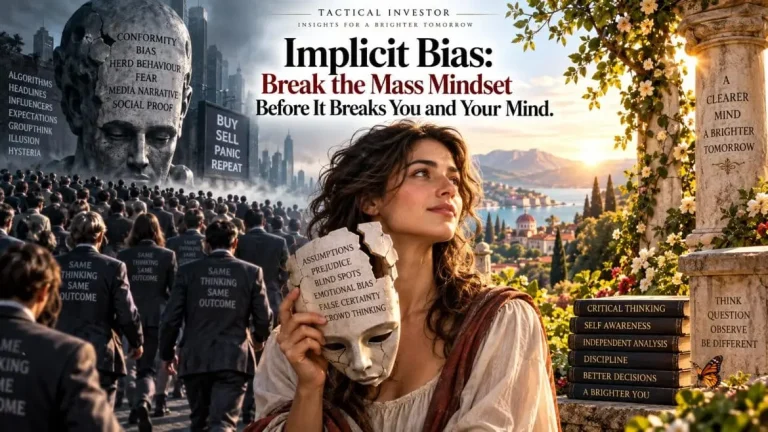
One of the hardest things in investing is maintaining an independent mind while surrounded by people who appear certain. During euphoric markets, television commentators, analysts, social media, and investors reinforce one another until the prevailing narrative begins to feel like objective truth. During crashes, the same machinery produces the opposite effect, convincing investors that the financial world has fundamentally changed and that prices will continue falling indefinitely.
This is where herd mentality becomes financially destructive. The individual believes he is making an independent decision, yet his decision is often the accumulated product of thousands of other people’s opinions.
Psychological independence does not mean automatically opposing the majority. It means refusing to outsource judgment to the majority. A genuine contrarian asks what the crowd believes, how much of that belief is already reflected in price, and what would happen if the prevailing narrative begins to fail.
The Superpower of Seeing Fear as Information
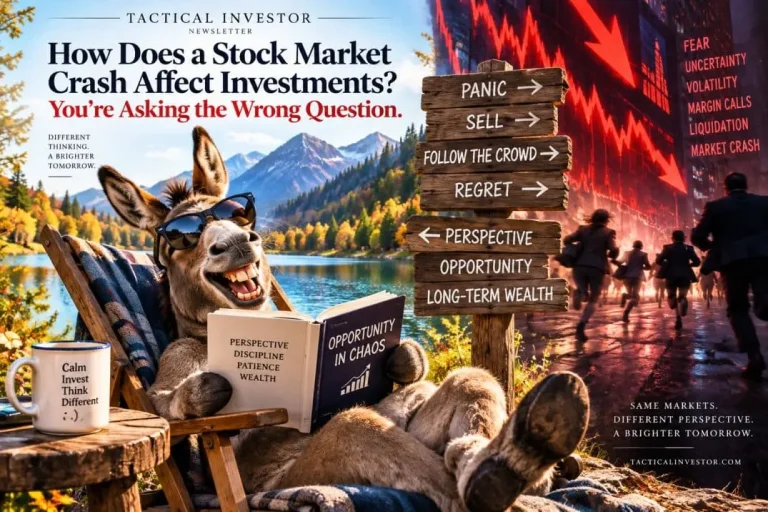
Fear is normally treated as something investors should avoid. A psychologically sophisticated investor treats extreme fear as information. When investors become frightened, their behaviour changes. They demand liquidity, reduce risk, abandon weak positions, and sometimes sell high-quality assets simply because they need psychological relief or immediate cash. That process can create extraordinary distortions between price and value.
The great market opportunities frequently appear when the emotional intensity of the crowd becomes greater than the fundamental deterioration of the underlying assets. This does not mean every crash is a buying opportunity, nor does it mean every falling stock is cheap. It means the investor should become more analytical when fear becomes extreme rather than less analytical. The question is no longer, “Why is everyone selling?” The more useful question becomes, “What does everyone believe they know, and how much of that belief is already reflected in the price?”
Liquidity: The Superpower Nobody Appreciates Until It Matters
Liquidity is often ignored during calm markets because investors become focused on returns. During periods of extreme volatility, however, liquidity becomes strategic capital. Cash gives an investor the ability to act when others are forced to react. It allows positions to be accumulated gradually, provides protection against unexpected developments, and creates the psychological freedom to take advantage of opportunities without being forced to sell something else.
This is particularly important during market crashes because the greatest opportunities rarely arrive when confidence is high. They appear when investors are frightened, headlines are catastrophic, and attractive assets are being offered at prices that seemed impossible only months earlier. Liquidity therefore creates optionality. It gives you the ability to wait, and waiting gives you the ability to act.
The Superpower of Getting Paid to Wait
Options can transform patience from a passive concept into an active strategy. For an investor who genuinely wants to own a stock at a lower price, selling a cash-secured put can potentially generate premium while waiting for the market to reach a desired entry level. If the stock remains above the strike, the investor keeps the premium; if the stock falls below the strike and assignment occurs, the investor acquires shares at the predetermined strike, with the premium reducing the effective entry cost.
This creates a fundamentally different mindset from simply chasing stocks higher. Instead of demanding that the market give you the price you want immediately, you can structure the position so that you get paid to wait.
The strategy still carries risk because a sharply falling stock can produce substantial losses after assignment. The difference is that the strategy begins with an investor who already understands and wants the underlying asset, rather than someone using options simply because volatility appears attractive.
Technical Analysis: The Superpower of Timing
Fundamentals can tell you what an asset may be worth, while psychology can explain why the crowd is mispricing it. Technical analysis can help reveal when the market’s behaviour is beginning to change. Indicators such as RSI, MACD, moving averages, breadth, and volume are useful because they provide evidence about momentum and participation. A divergence, for example, can reveal that price is moving in one direction while momentum is failing to confirm the move, potentially signalling that the prevailing vector is losing strength.
But no indicator possesses supernatural powers. Technical analysis becomes dangerous when investors turn probability into certainty and assume that one oversold reading or one divergence guarantees a reversal. The real superpower is synthesis. When technical behaviour, valuation, sentiment, liquidity, and mass psychology begin pointing toward the same conclusion, the investor has something far more valuable than an isolated indicator.
The Superpower of Thinking in Cycles
Human beings constantly believe that the present is permanent. During bull markets, investors assume prices will continue rising. During crashes, they assume the financial environment will remain broken. This is one of the most persistent behavioural errors in investing because recent experience dominates perception.
Cycle thinking breaks that psychological trap. Markets move through periods of accumulation, optimism, enthusiasm, excess, distribution, fear, capitulation, and recovery, although the duration and intensity of each phase vary considerably.
The investor who understands cycles does not assume that history repeats perfectly. Instead, he recognizes recurring patterns in human behaviour. Greed still produces overvaluation, fear still produces liquidation, and extreme sentiment still creates the conditions from which major reversals can emerge.
AI Is a Tool, Not an Investment Superpower
Artificial intelligence dramatically increases the amount of information investors can process, but more information does not automatically produce better decisions. AI can analyze financial statements, monitor news, compare valuations, identify patterns, process sentiment, and organize enormous datasets at speeds impossible for an individual investor. Yet the interpretation of those outputs still depends upon understanding incentives, psychology, uncertainty, and the limitations of historical patterns.
The future advantage will therefore belong neither to humans alone nor to machines alone. It will belong to investors who can combine technological intelligence with an understanding of human behavior. AI can process the battlefield. It cannot remove the psychology of the soldiers.
The Ultimate Superpower: Discipline
Every other investment advantage eventually becomes useless without discipline. You can understand valuation and still chase stocks. You can understand mass psychology and still panic. You can identify an exceptional opportunity and still deploy too much capital too quickly. You can have the correct long-term thesis and still destroy the position through emotional decision-making.
Discipline connects knowledge to action. It means having predetermined rules for position sizing, maintaining liquidity, entering gradually, challenging your own assumptions, and refusing to allow temporary market volatility to dictate permanent decisions. It also means knowing when not to act, because inactivity is often superior to forcing capital into an unattractive opportunity. The disciplined investor does not attempt to eliminate emotion. He builds a process that prevents emotion from controlling the portfolio.
The Real Superpower Is Understanding People
The most important discovery in investing is that the market’s greatest opportunities often emerge from human behaviour rather than from hidden information. People become greedy after prices rise, fearful after prices fall, confident when surrounded by agreement, and uncertain when everyone else becomes uncertain. They extrapolate recent events, follow narratives, seek confirmation, and frequently make their most consequential decisions when their emotional state is least reliable.
This creates the market’s central paradox. The same psychology that creates bubbles also creates crashes, and the same fear that destroys confidence can create the valuations from which the next opportunity emerges.
That is why the investor’s real superpower is not prediction. It is perception. See the crowd. Understand the emotion. Identify the vector. Determine whether price confirms the narrative or contradicts it. Preserve liquidity until opportunity becomes asymmetric, and then act with enough conviction to matter.
The market will always produce another story, another crisis, another euphoric opportunity, and another moment when the crowd becomes convinced that this time is different. The investor who understands human behaviour does not need to know which story comes next. He only needs to recognize the pattern when it arrives. The greatest investment superpower is not seeing the future. It is understanding the people who are creating it.

Other Articles of Interest