Decoy Effect Pricing Examples: Strategy, Risks, and When to Use It Wisely
Updated Feb 20, 2026
Beware the destructive power of herd mentality. In markets, fear spreads faster than wildfire, and in pricing strategy, psychological manipulation can be just as combustible. Consumers and businesses alike fall for tactics engineered to exploit cognitive blind spots—often without realizing it. The decoy effect is one of the most potent of these tools, capable of steering behaviour, boosting revenue, and reshaping decisions. But power without precision is dangerous. Used without discipline, it can corrode trust and poison long‑term relationships.
The decoy effect isn’t merely a pricing trick—it’s a window into the machinery of decision‑making. Like any psychological lever, it demands respect. Mishandling it doesn’t just fail to persuade; it backfires. Before deploying it, we need to understand the mental architecture that makes this tactic so effective—and so hazardous.
Exposing Market Panic and the Roots of Irrational Behavior
Before analysing decoy effect pricing examples, we must confront the broader reality: fear and bias dominate human decisions. When people feel overwhelmed or uncertain, they reach for shortcuts. These heuristics help them cope but often lead to irrational choices. Whether it’s financial markets or retail shelves, the herd mentality thrives where fear is high and clarity is low.
Think of a market crash. Panic spreads, selling accelerates, and investors destroy their own portfolios in an attempt to “avoid loss.” The same psychological pattern applies in pricing. Businesses can nudge consumers into predictable behaviour by framing their choices—steering them toward an option that feels safe, valuable, or “smart.” The decoy effect is one such nudge: small in appearance, enormous in impact.
Take a simple subscription model: \$10 basic, \$25 premium, and a \$24 mid‑tier with fewer features than premium. That \$24 option isn’t meant to sell—it exists to make the \$25 plan look irresistible. The consumer thinks they’re maximizing value, unaware their decision was engineered from the start.
The Psychology Behind Decoy Effect Pricing Examples
The decoy effect thrives on a paradox: people want choice, but too much choice overwhelms them. Behavioural economists call this comparison‑dependent decision‑making. We don’t evaluate options on their absolute merits—we judge them relative to one another.
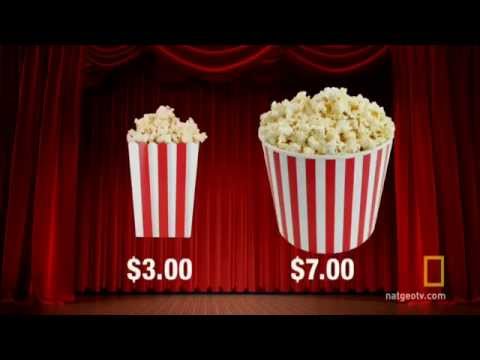
Picture a café: \$3 small coffee, \$6 large. Straightforward. Add a \$5 medium and suddenly the large seems like the obvious value upgrade. The medium isn’t there to sell—it’s there to anchor your judgment and shape your perception of value.
The effect pulls on loss aversion (fear of missing a good deal) and anchoring (fixation on initial information). The decoy becomes the mental benchmark that nudges you toward the option the business wanted you to pick in the first place.
Contrarian Mastery in Pricing: When to Use the Decoy Effect
Businesses that understand human behaviour know the decoy effect can influence choices powerfully. But it’s only effective when deployed with precision. A decoy that’s too obvious insults the customer. One that’s too subtle fails to shift behavior. The balance between persuasion and subtlety is everything.
A classic example is The Economist pricing strategy: \$59 for online access, \$125 for print access, \$125 for both. Print‑only acted as a deliberate decoy, pushing people to choose the print+online bundle. Same price, more value—an engineered “smart choice.”
But contrarian thinkers understand the danger: overusing this tactic erodes trust. If customers sense manipulation, they recoil. The goal is to influence without exposing the scaffold beneath the stage.
Strategies for Implementing the Decoy Effect
To use the decoy effect effectively, companies must adhere to core principles:
- Create a Clear Value Hierarchy: Each choice should have a coherent purpose. The decoy must enhance the target option’s appeal without muddying the lineup.
- Know Your Audience: Different customer groups respond differently. Market research matters.
- Test and Iterate: Use A/B testing to refine decoy placement. Real-world behaviour is the only reliable teacher.
Consider a SaaS business with Basic, Pro, and Enterprise tiers. If the Pro tier sits close to Enterprise in price but lacks key features, it becomes a decoy that drives customers upward. Done right, this increases both revenue and perceived value.
Risks and Pitfalls of the Decoy Effect
Like any form of psychological engineering, the decoy effect can go wrong quickly. If consumers detect manipulation, the backlash is immediate. Trust evaporates. And once trust is gone, no pricing strategy can repair the damage.
Another pitfall: the decoy sometimes becomes unintentionally appealing. If the decoy’s value is miscalibrated, customers gravitate toward it instead of the intended target, undermining the strategy entirely.
And context matters. In commodity markets, price sensitivity overpowers psychological framing. In trust‑critical sectors—healthcare, finance—using a decoy can appear predatory.
Disciplined Boldness: Balancing Strategy with Integrity
The decoy effect demands bold thinking tempered by discipline. Companies must be willing to experiment—but they must also maintain integrity. A pricing strategy that increases revenue but damages brand perception is not a strategy; it’s a slow bleed.
Look at Apple. Their premium pricing stands on years of consistent delivery. They occasionally deploy decoys—older models or lower‑tier configurations—but their success stems from pairing strategic nudges with genuine product value. Customers pay because the value is real, not simply engineered.
Visionary Empowerment: The True Value of the Decoy Effect
The decoy effect isn’t merely about extracting more revenue. It’s a deeper lesson in decision design—how people think, choose, and perceive value. Businesses that master it gain more than pricing power; they gain psychological insight.
Consumers benefit too. When you understand the decoy effect, you spot manipulation instantly. You evaluate choices instead of reacting to them. You gain clarity where others fall into traps.
For investors and business leaders, the decoy effect is both tool and teacher. It reveals how psychology drives markets, how perception shapes value, and how subtle shifts in framing can alter behaviour at scale.
Used wisely, the decoy effect becomes a force multiplier—shaping decisions while maintaining trust. Used recklessly, it becomes a weapon that backfires.
Ultimately, the decoy effect is a reminder of a simple truth: psychology moves markets, purchases, and people. Understanding it gives you an advantage. Respecting it keeps you from abusing it.