
Silence Before a Break Always Feels Intelligent
Mar 9, 2026
The Comfort of Quiet Markets
Silence in markets often gets mistaken for intelligence. When nothing urgent forces a decision, belief quietly hardens. Investors stop asking what could go wrong and begin asking why trouble has not appeared yet. The shift feels like confidence, but it is closer to conditioning.
Conditioning forms through repetition. Every dip that recovers teaches investors to react faster the next time. Every scare that fades trains the crowd to ignore risk signals that once demanded attention. Gradually, analysis fades into habit. People stop evaluating conditions and start repeating learned behaviour.
That is when vector pressure begins building beneath the surface.
Markets move through a mixture of price behaviour, participation patterns, and narrative reinforcement. Price is the visible element, the one that commands headlines and attracts the most attention. Behaviour moves quietly underneath, guiding the direction of capital flows long before the chart reveals it. Narrative binds the two together into a story that makes the entire environment feel rational.
When those forces align, participation expands, and confidence appears justified. When they drift apart, stress accumulates slowly beneath the calm surface.
Most investors watch only the price. The deeper signals appear in participation.
Breadth begins thinning. Leadership narrows. Volatility compresses into unnatural calm. These are not trading signals. They are psychological diagnostics. They reveal the crowd’s emotional state long before the headlines notice anything unusual.
Markets rarely break suddenly. They compress first.

Compression Disguised as Stability
Compression rarely feels dangerous while it develops. It often looks like maturity. Participation gradually concentrates into a handful of strong names while weaker segments fade quietly in the background. The index appears stable. Commentators praise resilience. Investors interpret the calm as confirmation that the system is healthy.
This is where herd psychology becomes dangerous. The crowd internalises a set of rules that worked earlier in the cycle. Buy weakness. Ignore temporary warnings. Trust the long trend. These rules are not wrong in the early stages of expansion. They become lethal when carried forward without adjustment.
Late-cycle environments reward reflex rather than analysis. Investors begin responding automatically to price movements without questioning whether the environment itself has changed.
One of the clearest patterns appears in market breadth. In almost every major cycle, participation peaks months before the price does. Fewer stocks continue pushing higher. Instead of recognising deterioration, the crowd invents explanations that maintain belief.
They call it leadership. They call it rotation. They call it a stock pickers’ market. The phrases sound reasonable. That is why they survive.
Nothing has broken yet, so the explanation remains intact. Volatility suppression creates another form of compression. Long stretches of calm teach investors to sell protection and collect income from quiet markets. Strategies that depend on stability multiply rapidly. Risk gets repackaged as yield.
For a while, the system appears efficient. Then volatility returns and reveals how fragile that stability really was.
Volatility Is Communication
Volatility does not represent chaos. It represents communication. When it disappears for too long, it usually means risk stopped being priced properly. Investors misread that silence as proof that danger vanished.
In reality, the opposite tends to occur. Humans anchor their expectations to recent experience. If the last few corrections were shallow, deeper ones feel implausible. If liquidity appeared quickly during previous selloffs, investors assume it will appear again automatically.
Structure rarely cares about those assumptions.
One of the most overlooked signals late in a cycle is the compression of reaction time. Early in an expansion, corrections unfold slowly. Buyers accumulate methodically, and markets build durable bases before moving higher again.
Later in the cycle, the behaviour changes. Every dip gets bought almost immediately. Pullbacks become shallow and brief. Investors rush to act before prices escape again.
That frantic speed often gets mistaken for strength. In reality, it reflects fear of missing out.
When reaction time compresses, optionality disappears. Investors believe they will exit positions easily if conditions deteriorate. The problem appears when everyone tries to exit simultaneously.
Liquidity exists only while nobody urgently requires it.
Narratives also multiply late in the cycle. Innovation, policy support, structural change, and demographic shifts. Each explanation offers a reason to stay invested. None requires immediate proof. They coexist comfortably because price has not yet forced them to compete.
When the price finally moves against them, those narratives collapse together. Belief rarely fades gradually. It tends to vanish all at once.
The Crowd’s Greatest Skill: Dismissal
Every cycle presents warning signs before the break. The crowd almost always notices them. The defining psychological act is dismissal.
Dismissal allows participation to continue without discomfort. Caution becomes pessimism. Skeptics become outsiders. Social pressure quietly reinforces optimism because few people want to appear early and wrong.
Being early rarely looks intelligent in real time. It looks foolish until the cycle turns.
That gap between perception and reality explains why exposure remains high late in expansions. Investors gradually increase leverage because nothing in recent memory has punished them for doing so. Risk migrates into areas that feel safe precisely because they have not yet been tested.
Then the asymmetry appears.
Downside moves faster than upside because selling requires no imagination. Fear compresses time. Buyers deliberate and evaluate. Sellers react instantly.
This asymmetry exists in every market regime but becomes dominant late in cycles.
The crowd expects symmetry because the rally felt orderly and gradual. When the reversal arrives, the speed feels shocking even though the conditions that produced it were visible for months.
One of the clearest fatigue signals appears in recovery behaviour. Pullbacks still bounce, but each bounce requires more effort and travels less distance. Rallies lose momentum even while prices continue climbing slowly.
Another signal appears in selective resilience. A handful of large companies hold the index steady while broad segments of the market quietly deteriorate. Investors celebrate the strength and ignore the erosion underneath.
Confidence survives longer than logic.
Why Corrections Always Feel Sudden
When the correction finally begins, it almost always feels unjustified in the moment. Investors search for catalysts that explain the shift. They blame news events, policy changes, and geopolitical shocks.
The deeper explanation is rarely dramatic.
The system simply accumulated too much fragility while everyone believed stability had become permanent. Behaviour trained the crowd into a narrow set of responses. When those responses stopped working, the structure broke quickly.
People often claim there were no warnings. What they usually mean is that the warnings did not align with their behaviour.
Warnings rarely shout. They whisper. They appear as discomfort long before they appear as a crisis. Acting on them requires reducing exposure when nothing obvious demands action.
That is psychologically difficult for most investors. Vector thinking removes some of that confusion by focusing on pressure rather than prediction. Where is participation thinning? Where is volatility compressing? Where is the reaction speed increasing? These forces do not identify exact turning points, but they reveal where vulnerability is accumulating.
Vulnerability alone is often enough.
The objective is not to call the precise top. The objective is to avoid becoming trapped when the crowd suddenly realizes it was wrong together.
When Crashes Become Opportunity
History repeatedly shows that the same events that terrify investors in the moment later become the foundations of enormous opportunity. Market crashes punish leverage and speculation, yet they also reset valuations to levels that long term investors rarely see during calm periods.
The 1929 collapse provides the clearest example. The Dow Jones Industrial Average lost almost ninety per cent of its value between 1929 and 1932. Investors who bought during the euphoric peak experienced devastation. Yet those who accumulated quality assets during the depths of that collapse later participated in one of the most powerful economic expansions in modern history.
The pattern appeared again in 1987. The market dropped more than twenty percent in a single day. Panic dominated every headline. Within two years, prices had fully recovered and continued climbing.
The dot com crash followed the same psychological script. Speculation in technology companies pushed valuations far beyond reality during the late 1990s. When the bubble burst, the NASDAQ eventually lost nearly eighty per cent of its value. Yet that destruction cleared the field for companies like Amazon and Apple to emerge stronger and eventually dominate global markets.
The 2008 financial crisis looked like a systemic collapse while it unfolded. Banks failed. Credit froze. Fear dominated every financial conversation. Investors who stepped in during early 2009, when pessimism reached its extreme, entered one of the longest bull markets in history.
Even the 2020 pandemic crash followed the same cycle. Markets plunged rapidly as the global economy shut down. Within months, the recovery had already begun.
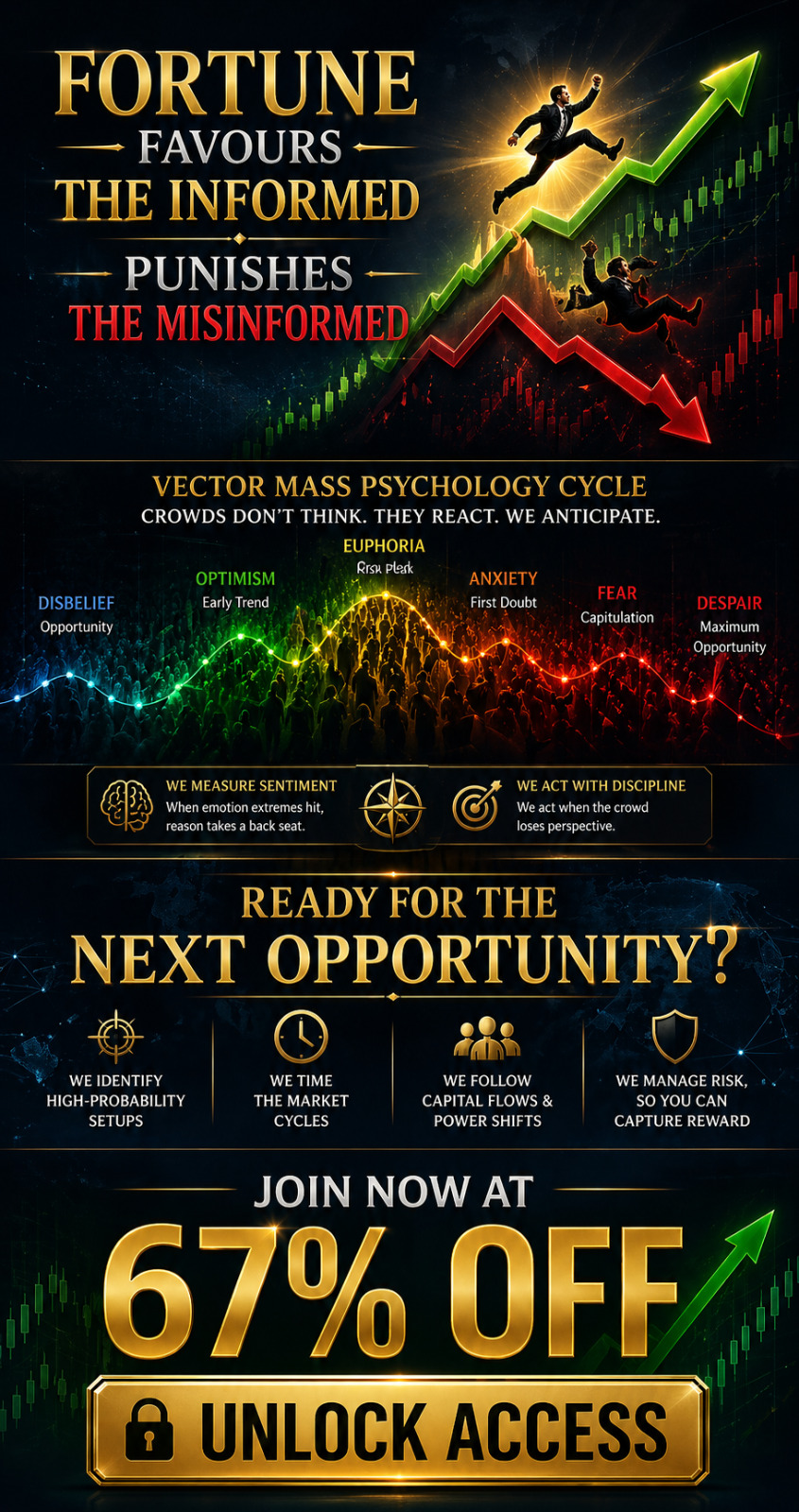
Crashes reveal the uncomfortable truth that markets move through emotional extremes. Euphoria convinces investors that risk has disappeared. Panic convinces them that opportunity has vanished.
Both beliefs prove temporary.
Even legendary traders demonstrate how difficult discipline can be. Jesse Livermore, one of the most successful speculators of the early twentieth century, built vast fortunes by understanding crowd psychology. He profited enormously during several market collapses, including the 1929 crash.
Yet Livermore’s career also illustrates the limits of brilliance. He repeatedly violated his own rules during later periods of speculation. Fortunes built through patience disappeared through moments of impatience. His story remains a reminder that no trader is immune to psychology.
There is no perfect investor. Markets do not reward perfection. They reward discipline maintained through discomfort.
Every crash exposes two types of participants. One group reacts emotionally and sells into fear. The other group studies the wreckage, waits for the panic to exhaust itself, and begins building positions quietly.
The difference rarely lies in intelligence. It lies in behaviour.
Markets have repeated this transfer of wealth for centuries. The crowd rarely notices the pattern while it unfolds. Only afterwards does the structure become obvious.
Silence always feels intelligent before the break. Until the break arrives.