Mechanical Trading Systems: Analysing Markets and Trends with Precision
Nov 4, 2025
Introduction: The Mechanical Illusion
Markets do not fail; minds do. Every generation builds a new machine to spare itself the pain of judgment, then worships it until it collapses under its own precision. The modern trader’s shrine is the mechanical system—an algorithm that promises salvation through discipline and immunity from emotion. But the system’s flaw is visible in its name: mechanical.
Machines repeat; humans evolve. The market, being human, punishes repetition.
Fundamental analysis pretends to be different, yet it’s the same machine dressed in data. Ratios, earnings, guidance—all standardised templates that transform thinking into arithmetic. They create the illusion of control, but control is just fear wearing a spreadsheet. Every mechanical system, whether algorithmic or fundamental, suffers the same fatal oversight: it removes the most volatile variable in the equation—the human animal.
Markets are not ruled by logic. They’re ruled by lust, greed, envy, and despair—emotions that algorithms can detect but never feel. The absence of feeling is not objectivity; it’s blindness. The Merriam-Webster definition—“done as if by a machine, uninfluenced by mind or emotion”—reads like a confession. To be uninfluenced by the mind or emotion is to be uninformed by the market itself.
The human element is not noise; it’s the signal. Crowd emotion generates a trend, not the other way around. Algorithms can map the surface, but they can’t interpret why price moves where it does. Every uptick and crash is a chemical event: dopamine in euphoria, serotonin in complacency, cortisol in panic. The trader who learns to read emotion as data transcends the algorithm.
Mechanical systems fail because they treat history as prophecy. They assume yesterday’s pattern will repeat tomorrow. But history doesn’t repeat; it mutates. By the time an indicator becomes popular, it has already been priced into irrelevance. The market’s prime directive is adaptation, not consistency.
Consider the paradox theory: most traders lose precisely because they do what seems safest. Systems built on consensus logic feed the 90/10 split—the few who deviate thrive on the majority’s obedience. The market’s cruelty lies in its fairness: it rewards perception, not participation.
Language reveals the deeper pathology. We call optimism “bullish,” pessimism “bearish,” as if volatility were zoology. We label traders “bugs” and “scalpers,” parasites and predators locked in a feeding loop. Even our vocabulary betrays self-contempt. A culture that names its participants after insects and beasts shouldn’t be surprised when it behaves like them.
The irony is grotesque: we use “mechanical precision” to describe systems that repeatedly fail, then blame emotion when they do. But emotion isn’t the problem—it’s the compass. The issue is ignorance of one’s own bias.
Each market bubble is proof of linguistic hypnosis. The 2008 collapse wasn’t born of leverage—it was born of euphemism. “Collateralised debt obligations” sounds sophisticated; “bundled garbage” does not. Complexity was camouflage. Traders chanted acronyms like spells, mistaking obscurity for mastery. The crowd obeyed the syntax, not the sense.
And now, once again, history replays as parody: the credit bubble, the real-estate bubble, the crypto mirage: same greed, higher resolution. We borrow to buy what we don’t need, using credit to service credit, baptising absurdity as innovation. Our ancestors were reckless; we are efficiently reckless.
Mechanical systems give us the illusion of safety in a world that thrives on surprise. They are comfort food for anxious minds—predictable, tasteless, fatal in excess. The only immunity from chaos is intimacy with it.
To master markets, you must master contradiction.
Be systematic in preparation, chaotic in perception.
Use tools, but distrust templates.
When in doubt, watch people, not prices.
Because markets are not machines.
They are mirrors, and the reflection always stares back.

The Human Algorithm: Precision Through Psychology
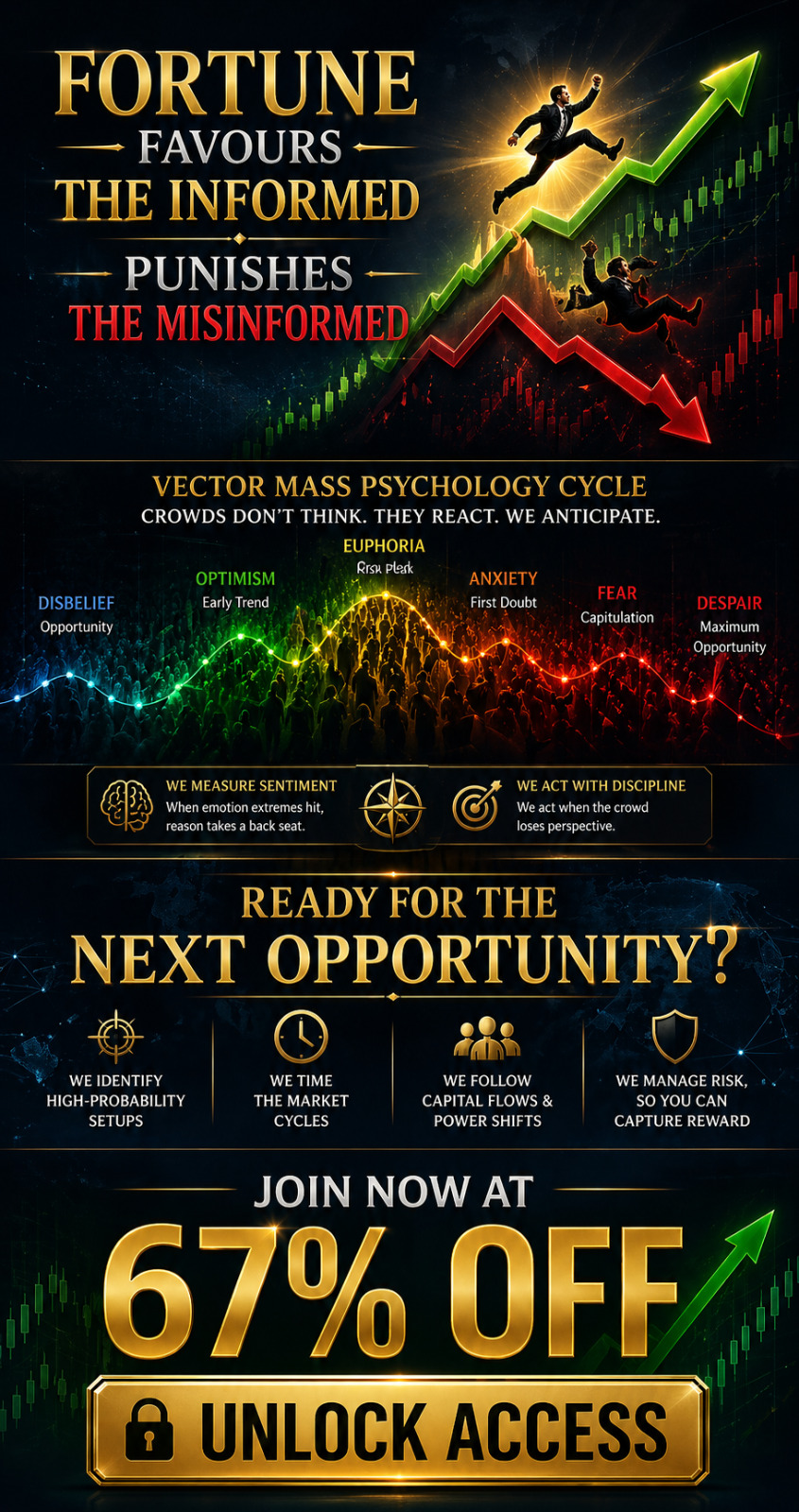
Every chart conceals a heartbeat. The trader who ignores this rhythm trades ghosts—the successful one trades behaviour. Markets are the visible pulse of collective emotion—greed expanding price, fear compressing it, apathy flattening both.
The paradox is simple: the more mechanical our systems become, the more emotional the markets turn. Algorithms amplify feedback loops faster than human panic can register. Machines now execute the crowd’s impulses with surgical precision, but not a hint of conscience. The only surviving edge is emotional intelligence sharpened by structure.
Ibn Tufail understood this centuries ago: the masses are swayed by passions, not reason. The modern trader must therefore master reason only to interpret passion. The crowd still worships its systems—backtests, signals, AI-generated “precision”—yet each innovation collapses into the same behavioural cycle: curiosity, confidence, conviction, mania, regret. The StochRSI can chart it. The MACD can confirm it. But neither can prevent it.
The Cycle Repeats — Always With Better Software
Mechanical trading thrives because it offers certainty to those who fear self-awareness. It transforms complexity into routine, emotion into a checkbox. But the routine decays. When too many minds follow the same formula, volatility concentrates, and markets become self-cannibalising. The 90 per cent lose not through ignorance but through synchronisation.
David Ricardo’s cold logic still stands: discipline is vital, but so is judgment. The system should inform, not command. A trend is an organism; its anatomy can be dissected but not predicted. Livermore, the market’s first psychologist, never worshipped his rules—he watched his rules fail until they spoke a more profound truth: every breakout is a test of conviction, not knowledge.
Contrarianism isn’t rebellion—it’s timing. Nathan Rothschild’s maxim, “Buy when there’s blood in the streets,” is not a slogan; it’s an x-ray of human overreaction. The contrarian doesn’t oppose the crowd out of arrogance but out of literacy: he reads the chemistry of panic while others feel it.
Mass psychology provides the larger framework.
Crowds operate like fluid dynamics—pressure, flow, turbulence. Euphoria expands participation until liquidity dries, then implosion restores equilibrium. The trader’s task is not to fight this rhythm but to surf it consciously. Recognise when your conviction feels universal; that’s usually the top. When your logic feels insane to everyone else, that’s the bottom.
The Cult of Simplicity
Mechanical systems appeal to the same part of the brain that loves dogma. It’s comforting to obey. But as John Stuart Mill warned, once a truth stops being doubted, it stops being understood. Standardised settings—14-period RSI, 9/26 MACD—represent intellectual surrender. They were useful once; now they’re collective anaesthesia.
Customisation isn’t aesthetics; it’s survival. A trader’s indicators must reflect his own tempo, his tolerance for pain, his cognitive rhythm. Tools are not teachers; they’re translators. Adjust them until they speak your dialect.
Patience and discipline remain the unsexy virtues. They are the oxygen between trades. The best traders spend 80 per cent of their time not trading. They watch, absorb, and metabolise. They know that money moves from the impatient to the observant.
Diversification is emotional geometry. Too much concentration breeds anxiety; too much dispersion breeds apathy. Machiavelli would divide risk as he divided armies—so no single loss could destroy morale.
The Final Lesson — Precision Through Humanity
The market rewards precision of perception, not perfection of method. Precision requires intimacy with chaos, a willingness to feel its contours without being devoured by it. The trader’s true weapon is adaptability—rationality agile enough to dance with irrationality.
Mechanical systems can process data; they cannot interpret fear. They can model volatility; they cannot model faith. Those who merge technical discipline with psychological literacy form the new elite: half algorithm, half philosopher.
Because the market, at its core, is a mirror held to our collective nervous system.
Every spike in volume is a panic attack: every rally, a manic episode. Every crash is a moment of collective humility.
To master it is not to conquer it—it’s to understand the species that built it.
And in that understanding lies the only system that never fails: The human one.

Captivating Articles That Leave a Lasting Impression








Mastering Finance: Beware the Pitfalls of Fear Selling